Sugar glider veterinary care in Nashville
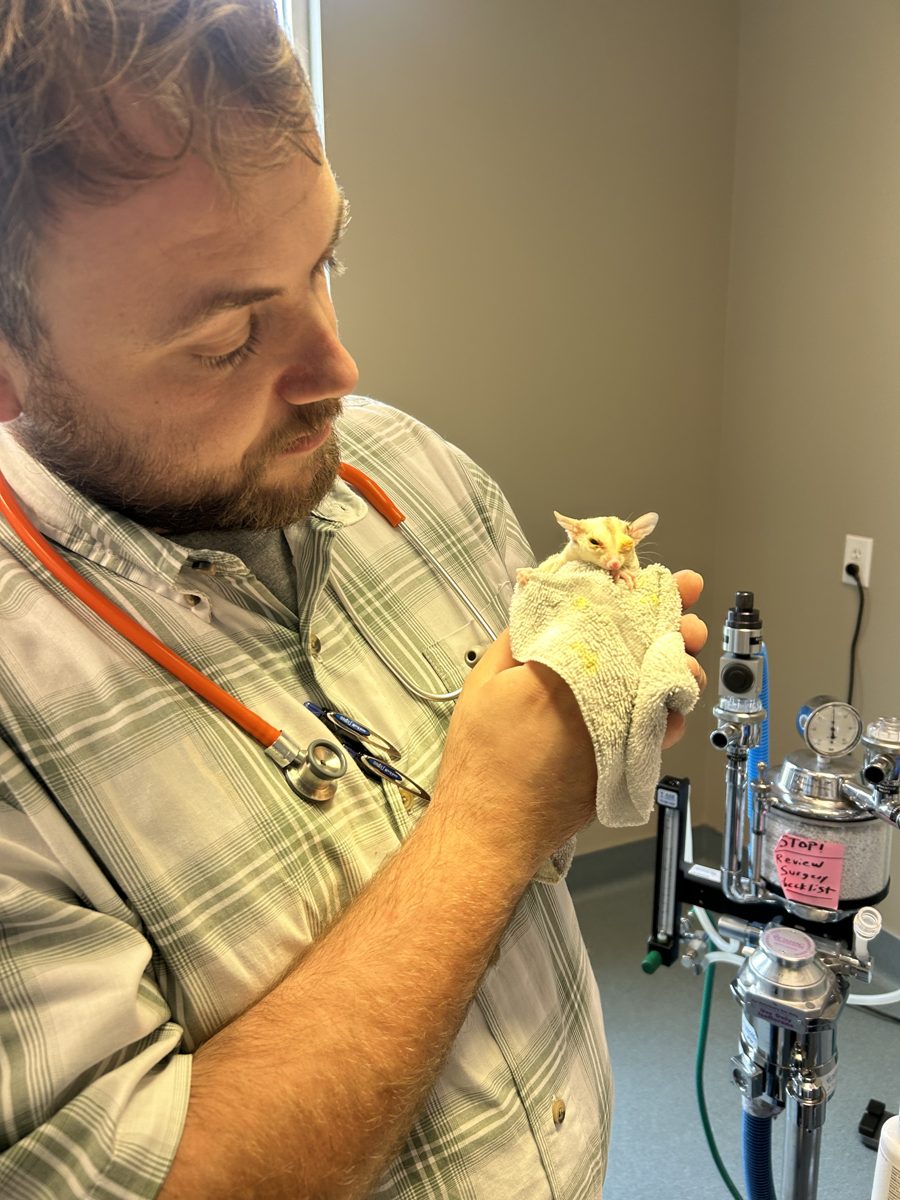
Sugar gliders are small, nocturnal, and social, and many of the illnesses that bring them in start with diet or housing. Dr. Kopp is an exotic companion mammal specialist and sees sugar gliders for primary care and referral cases at Priest Lake Veterinary Hospital in Antioch.
Bring the full diet, including any homemade mix, and tell us who the glider lives with. There are real gaps in what's known about sugar glider medicine, so we don't start anything until we've talked it through with you. For home care, see sugar glider nutrition and metabolic bone disease.
Sugar glider metabolic bone disease and nutrition
Hind limb weakness, tremors, or a fracture after ordinary activity can be metabolic bone disease, usually from a diet too low in calcium, too high in phosphorus, or short on other nutrients. Obesity is a nutrition problem too, and we'll look at it during the same visit. Call if your glider is weak, shaking, or reluctant to climb, and bring what you're already feeding. Please hold off on changing the diet until the visit.
- Nutritional secondary hyperparathyroidism
- Metabolic bone disease and calcium-phosphorus imbalance
- Hind limb weakness from nutritional disease
- Other nutritional deficiencies
- Obesity
- Diet counseling
Sugar glider dental disease
Facial swelling, dropping food, or a glider that cries when chewing can be a dental abscess or periodontal disease. If the face is swollen or your glider stops eating, call (615) 361-4646 while the hospital is open. We take skull and dental radiographs here in the hospital, and treatment is planned around anesthesia and pain control for a very small patient.
- Dental and periodontal disease
- Dental abscesses and facial swelling
- Skull and dental radiographs taken in the hospital for dental evaluation
- Dental treatment under anesthesia when indicated
Sugar glider self-mutilation and behavior
A glider chewing on a limb, the tail, or a surgical site needs a call while the hospital is open, at (615) 361-4646. When you call, tell us if your glider lives alone or if a group is fighting. The workup looks at pain, infection, stress, and social housing problems. Wound care starts at the visit, and the housing plan is part of treatment too.
- Self-mutilation
- Behavioral stress
- Social housing problems
- Wound care for chew injuries
Sugar glider skin and GI disease
Hair loss, scabs, and parasites are evaluated with the housing and the diet. Diarrhea and dehydration move quickly in a glider this size. A glider that is limp, cold, or not eating needs a call before you drive, while the hospital is open.
- Skin disease and skin infections
- Parasites
- Gastrointestinal disease and diarrhea
- Dehydration and fluid support
Sugar glider urinary and reproductive disease
We see urinary disease, reproductive disease, pouch infections, and mastitis in sugar gliders. If a joey is in trouble, the pouch is swollen, or a female is straining, call (615) 361-4646 while the hospital is open.
- Urinary disease
- Reproductive disease and reproductive emergencies
- Pouch infections and mastitis
- Castration for selected gliders
Sugar glider trauma, fractures, and anesthesia
Falls, cage injuries, and fractures are common reasons for an urgent visit. Some fractures can be repaired in partnership with board-certified veterinary surgeons (DACVS), and others are referred. We also do soft-tissue surgery, castration, and wound closure when they're right for the glider. Anesthesia is planned for a small marsupial, with a dedicated anesthesia technician monitoring ECG, oxygen levels, carbon dioxide, blood pressure, and temperature, along with warmth and pain control. Dr. Kopp is also a Fellow in Companion Animal Pain Management (FABVP-CAPM).
- Trauma and fractures
- Some fractures repaired in partnership with board-certified veterinary surgeons (DACVS), and others referred
- Soft-tissue surgery and castration
- Wound management
- High-quality anesthesia with dedicated anesthesia technicians and full monitoring
- Pain control
Dr. Kopp's background
Dr. Logan Kopp grew up in Nashville and earned his veterinary degree at the University of Tennessee. He's board-certified by the American Board of Veterinary Practitioners in Exotic Companion Mammal Practice, DABVP (ECM), and he's the only veterinarian currently practicing in Tennessee with that certification. He's also a Fellow in Companion Animal Pain Management (FABVP-CAPM).
If you're a veterinarian, here's how to refer a patient.
What a visit is like
Use a secure carrier with a hide, and double-check that the latch is closed. A written diet and a photo of the cage tell us more than a general description. If your glider is chewing a limb on the way in, call ahead so the team knows you're coming.
When to call
Call while the hospital is open if your sugar glider:
- Is weak in the hind legs, shaking, or unable to climb
- Has a swollen face, or has stopped eating
- Is chewing a limb, the tail, or a wound
- Has diarrhea, is cold, or is limp
- Has a pouch problem, mastitis, or trouble giving birth
- Fell, is bleeding, or may have a fracture
We're open Monday through Friday, 7:30 AM to 7:00 PM, and closed on weekends. Visits are by appointment, so please call (615) 361-4646 before you come in, even for an emergency. During those hours we can usually accept urgent transfers from primary care veterinarians, and we may be able to see emergency cases. After hours, exotic companion mammal consults go through Veterinary Emergency Group in Franklin, Murfreesboro, and West Nashville. And please don't give your pet any human pain medicine.
To book, call Priest Lake Veterinary Hospital at (615) 361-4646.